

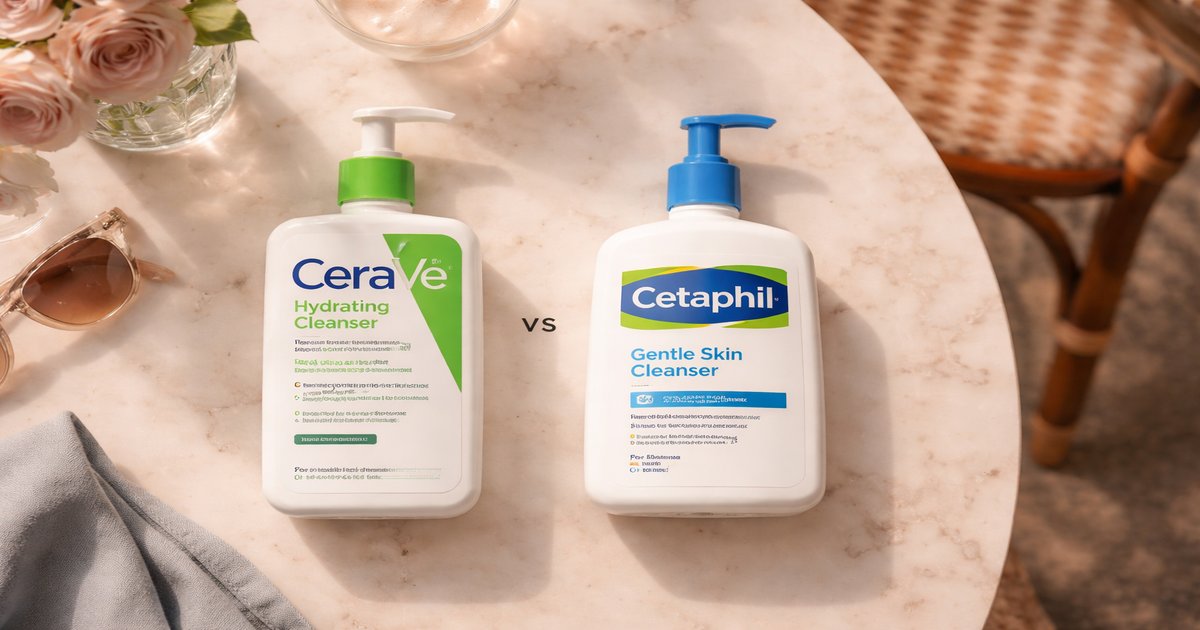
You’ve probably stood in the skincare aisle, staring at the endless options of face washes, wondering which one will actually do the job without leaving your skin feeling like sandpaper. CeraVe and Cetaphil are two titans in the face wash game, but which one deserves a spot in your daily routine?
| Feature | CeraVe Face Wash | Cetaphil Face Wash |
|---|---|---|
| Skin Type | Normal to Oily | All Skin Types |
| Key Ingredients | Ceramides, Niacinamide | Glycerin, Panthenol |
| Fragrance-Free | ✓ | ✓ |
| Foaming Action | ✓ | ✗ |
| Non-Comedogenic | ✓ | ✓ |
✅ cerave face wash Pros
- Contains ceramides for restoring the skin barrier.
- Foams well, providing a thorough clean feel.
- Includes niacinamide to calm the skin.
❌ cerave face wash Cons
- May be too drying for sensitive skin.
- Foaming action can sometimes feel too harsh.
✅ cetaphil Pros
- Gentle enough for sensitive skin.
- Moisturizing with glycerin, preventing skin from feeling stripped.
- Simple formulation, fewer irritants.
❌ cetaphil Cons
- Doesn’t foam, which might not feel like a thorough cleanse.
- Contains parabens, which some users prefer to avoid.
Performance
CeraVe’s foaming face wash is like the power wash setting on your garden hose. It gets everything off, leaving you with a squeaky clean feeling. However, if your skin leans towards sensitive, it might feel like a bit too much. Cetaphil, on the other hand, is more like a gentle sprinkle. It cleans without stripping, ideal for skin that reacts to harsher products. If you wear a lot of makeup or have oily skin, CeraVe will likely be your go-to. For the rest of you, Cetaphil provides a gentle cleanse perfect for daily use.
Ingredients and Skin Compatibility
CeraVe shines with its inclusion of ceramides and niacinamide. Ceramides help restore the skin barrier, while niacinamide reduces inflammation and redness. This makes it a great choice if you’re dealing with acne or oily skin issues. Cetaphil keeps it basic with glycerin and panthenol, making it less likely to irritate and a safer bet for sensitive skin. If your skin is picky and prone to reactions, Cetaphil’s minimalist approach might be just what you need.
Value for Money
Both products are similarly priced, but consider how your skin feels after using them. CeraVe offers a bit more in terms of active ingredients, which could justify the cost if your skin benefits from them. Cetaphil’s value lies in its simplicity and the fact that it won’t leave your skin crying out for a moisturizer afterward. If you’ve previously struggled with cleansers that dry you out, the extra few bucks for Cetaphil might be well worth it.
While both face washes boast ‘non-comedogenic’ labels, individual skin reactions vary. CeraVe’s foaming nature might be a bit too intense for those with extremely dry skin, regardless of its hydrating claims. Cetaphil, although gentle, may not satisfy those who prefer a lathering clean, especially if you live in a polluted city or wear heavy makeup daily.
Our Final Verdict: Which One Should You Buy?
Choose CeraVe if your skin is oily or acne-prone and you need a deep clean that doesn’t compromise on ingredients. It’s ideal for those who aren’t afraid of a little foam and want added skin barrier benefits. Opt for Cetaphil if your skin is sensitive, dry, or reacts to complex formulations. Its gentle cleanse is perfect for everyday use, especially if you prefer a minimalist skincare routine.
Is CeraVe face wash suitable for dry skin?
While it’s formulated for normal to oily skin, its foaming action might be too drying for already dry or sensitive skin.
Can Cetaphil remove heavy makeup?
Cetaphil is gentle and may not be enough to remove heavy makeup; a separate makeup remover might be necessary.
Are these face washes safe for acne-prone skin?
Both are non-comedogenic. CeraVe’s additional ingredients can help with acne, while Cetaphil’s gentleness minimizes potential irritation.