

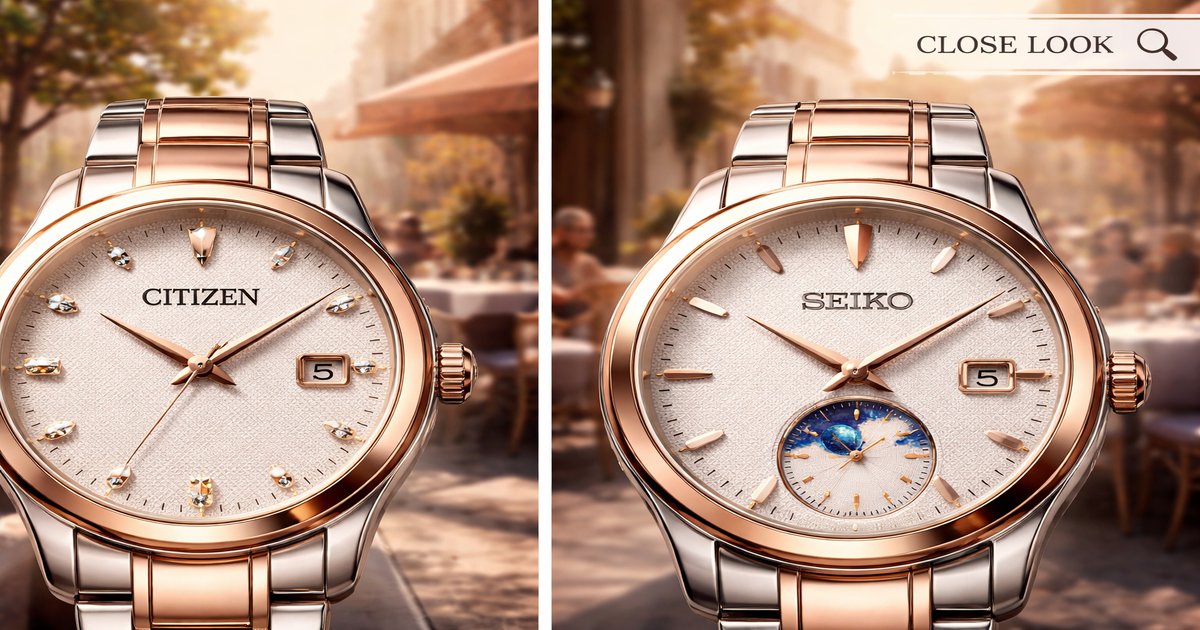
You’re standing in the watch aisle, staring down two titans of timekeeping: Citizen and Seiko. Both brands offer robust watches that cater to enthusiasts and everyday users alike. But which one deserves a place on your wrist?
| Feature | Citizen | Seiko |
|---|---|---|
| Movement Type | Eco-Drive (Solar) | Automatic/Quartz |
| Water Resistance | 100m | Up to 200m |
| Sapphire Crystal | ✓ | ✗ |
| Price Range | $200-$600 | $100-$5000 |
| Luminescence | ✓ | ✓ |
| Warranty | 5 years | 3 years |
| Smart Features | ✗ | ✗ |
✅ citizen Pros
- Eco-Drive technology eliminates battery replacements.
- Sapphire crystal for superior scratch resistance.
- Generally more affordable within the mid-range market.
❌ citizen Cons
- Less variety in high-end models.
- Lower water resistance compared to some Seiko models.
✅ seiko Pros
- Broad range from affordable to luxury.
- Renowned for diving watches with excellent water resistance.
- Reliable automatic movements.
❌ seiko Cons
- Lower-end models often use Hardlex instead of sapphire.
- Shorter warranty period.
Performance
Citizen’s Eco-Drive technology is a game-changer. If you hate the hassle of battery replacements, this solar-powered solution keeps you running indefinitely with any light source. For Seiko, the automatic movement is a classic choice. If you love the mechanical artistry of a ticking watch, Seiko’s range can offer you that sweeping second hand. But, remember, it needs regular wear to keep ticking, which can be a pain if you alternate watches frequently.
Build Quality
Citizen wins when it comes to scratch resistance with its sapphire crystal. If you’re hard on your watches, this is a big plus. Seiko, however, provides an impressive build in its dive watches, particularly with models that boast up to 200m water resistance. If your life involves a lot of water activities, Seiko has the upper hand. Just note that the lower-end Seikos might skimp on the materials, opting for their own Hardlex crystal instead.
Value
Citizen tends to offer tremendous value in the mid-range market, with prices that won’t make your wallet cringe while still delivering quality. It’s ideal for someone who wants a good everyday watch without going overboard. Seiko, on the other hand, offers a wider spectrum. You can snag a budget-friendly piece or splurge on a Grand Seiko if you feel like indulging. This range makes Seiko incredibly versatile, but it can also be overwhelming if you don’t know what you’re looking for.
Most reviews don’t mention that Citizen’s Eco-Drive can lose efficiency if stored in darkness for prolonged periods. Seiko’s automatics, meanwhile, can be sensitive to lack of movement, requiring regular winding or use. Both brands offer great durability, but knowing these quirks can save you from future frustrations.
Our Final Verdict: Which One Should You Buy?
Citizen is your go-to if you want a hassle-free, reliable watch for everyday use, especially if you’re someone who values low maintenance and longevity. It’s perfect for those who want a set-it-and-forget-it timepiece. Seiko is the choice for the watch enthusiast who appreciates variety and depth, whether you’re looking for a reliable diver or a premium heirloom piece. It caters to both casual wearers and horology aficionados.
How does the fit of Citizen and Seiko watches compare?
Both brands offer a variety of sizes, but Seiko tends to have more variation in terms of case diameter and thickness, which can be better for those with specific size preferences.
Are Citizen watches compatible with any smartwatch features?
No, Citizen primarily focuses on traditional watch features without smart integrations, sticking to its strengths in solar technology and analog movements.
What is the longevity of watches from both brands?
Both brands offer durable timepieces, but maintenance is key. Citizen’s Eco-Drive can last decades with minimal care, while Seiko automatics require regular servicing to ensure longevity.