

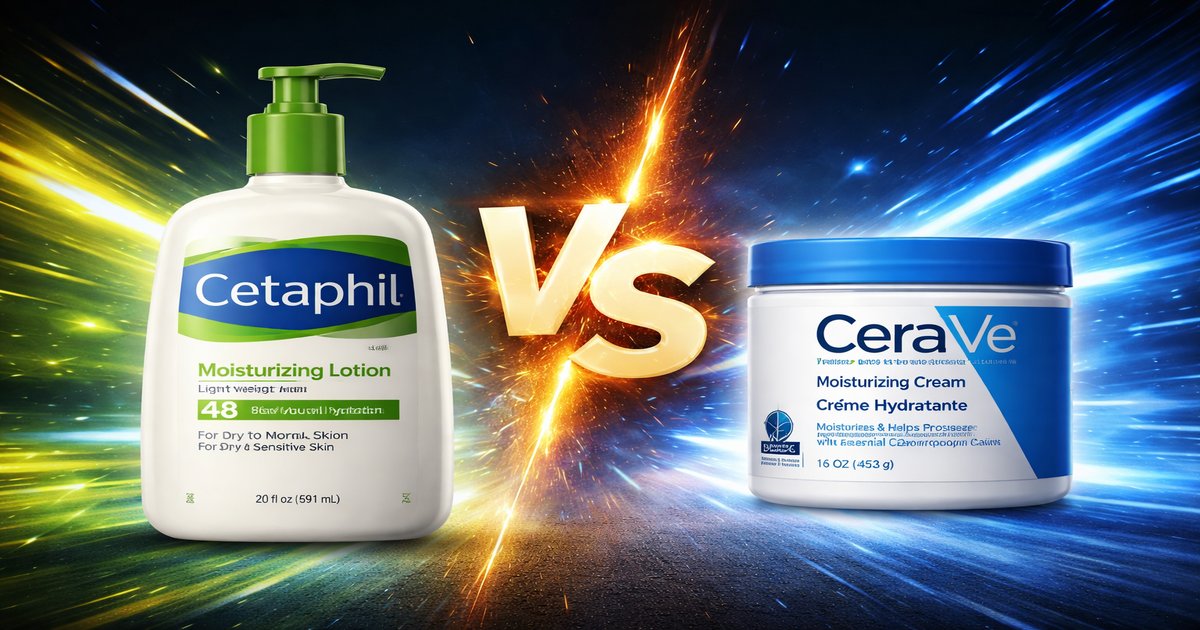
You’ve been staring at the skincare aisle for what feels like an eternity, trying to choose between Cetaphil and CeraVe moisturizers. Both promise hydration and a gentle touch, but which one actually delivers the goods? Let’s break it down and find the right fit for your skin’s needs.
| Feature | Cetaphil | CeraVe |
|---|---|---|
| Suitable for Sensitive Skin | ✓ | ✓ |
| Contains Ceramides | ✗ | ✓ |
| Fragrance-Free | ✓ | ✓ |
| Non-Comedogenic | ✓ | ✓ |
| Price (per 16 oz) | $11 | $14 |
| Texture | Light Cream | Rich Cream |
✅ cetaphil Pros
- Affordable for daily use
- Lightweight and absorbs quickly
- Excellent for sensitive skin
❌ cetaphil Cons
- Lacks ceramides for deep hydration
- Not the best for severely dry skin
✅ cerave moisturizer Pros
- Contains essential ceramides
- Deeply hydrating for dry skin
- Developed by dermatologists
❌ cerave moisturizer Cons
- More expensive
- Heavier texture might not suit oily skin
Performance: Hydration and Skin Feel
Cetaphil’s moisturizer is your best friend if you prefer a no-fuss, lightweight cream that leaves no greasy residue. It’s perfect for combination to slightly dry skin types. However, if your skin feels like the Sahara Desert every winter, CeraVe’s richness and ceramide-packed formula give it the edge. It penetrates deeper to repair the skin barrier, making it a savior for those with severely dry or compromised skin.
Build Quality: Ingredients and Formulation
CeraVe shines with its dermatologist-driven formulation, featuring ceramides and hyaluronic acid, ingredients that are top-tier for skin restoration. It’s a slightly thicker cream, which can be a dream for dry skin but a nightmare for oil-prone areas. Cetaphil, on the other hand, keeps it simple and effective. It’s hypoallergenic and fragrance-free, making it a safer bet if you’re prone to irritation or breakouts from heavier creams.
Value: Cost vs. Benefits
If you’re budget-conscious, Cetaphil gives you solid performance without breaking the bank. At $11 for a 16 oz bottle, it’s a great daily moisturizer. CeraVe, while pricier, offers more bang for your buck with its premium ingredients if your skin needs extra care. For those who need benefits beyond basic hydration, CeraVe’s $14 investment is justified by its enhanced formulation.
Cetaphil is a straightforward option, but it may leave you wanting more if your skin is particularly dry or damaged. CeraVe’s richness can be overkill for those with naturally oily skin, leading to unwanted shine. Both are solid, but they cater to different needs.
Our Final Verdict: Which One Should You Buy?
If your skin is generally well-behaved and you want an affordable, everyday moisturizer, go with Cetaphil. It’s perfect for those who want something lightweight and non-irritating. For severe dryness or if you’re tackling issues like eczema, CeraVe is your go-to. Its robust formula targets and repairs, but at a higher price point.
Can I use these moisturizers on my face?
Yes, both are non-comedogenic and safe for facial use. However, CeraVe’s thicker texture might be too heavy for oily skin types.
How long does a bottle last?
With daily use, a 16 oz bottle of either product typically lasts around 3 to 4 months, depending on application frequency and area covered.
Are these moisturizers vegan?
Neither brand is certified vegan as some ingredients may be animal-derived, though they are cruelty-free.