

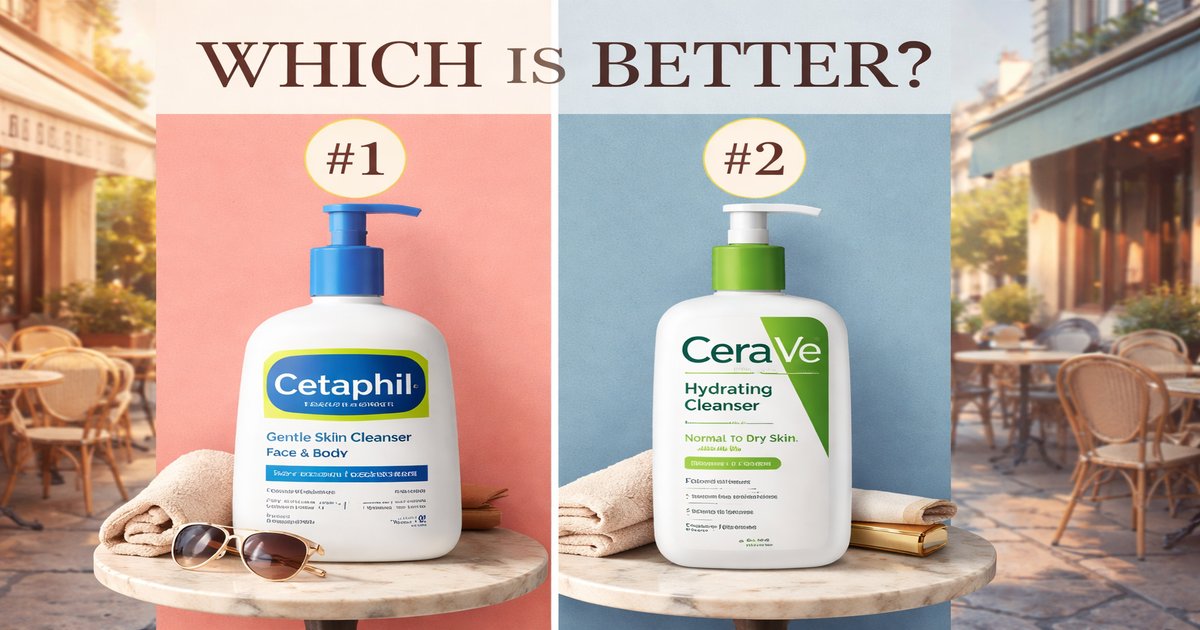
If you’re reading this, chances are your skin has declared a mutiny, and you’re caught in the crossfire of Cetaphil versus CeraVe. Both are cult-favorite cleansers, but which one will win a spot in your skincare routine? Get ready to cut through the noise.
| Feature | Cetaphil Cleanser | CeraVe Cleanser |
|---|---|---|
| Skin Type | All Skin Types | Normal to Oily |
| Contains Ceramides | ✗ | ✓ |
| Fragrance-Free | ✓ | ✓ |
| Non-Comedogenic | ✓ | ✓ |
| Includes Hyaluronic Acid | ✗ | ✓ |
| Price per 16oz | $11 | $15 |
✅ cetaphil cleanser Pros
- Gentle enough for sensitive skin.
- Budget-friendly option.
- Widely available in stores and online.
❌ cetaphil cleanser Cons
- Lacks the hydrating benefits of ceramides and hyaluronic acid.
- Can feel a bit too mild for those with oily skin.
✅ cerave cleanser which is better Pros
- Contains ceramides and hyaluronic acid for added hydration.
- Effective for normal to oily skin types.
- Dermatologist-recommended for maintaining skin barrier.
❌ cerave cleanser which is better Cons
- Pricier than Cetaphil.
- Not as gentle for ultra-sensitive skin.
Performance
When you’re washing your face after a long day, performance is key. Cetaphil is like the gentle friend who never lets you down—perfect for sensitive skin and everyday use. But don’t expect it to tackle a layer of makeup or heavy pollution. CeraVe, on the other hand, is your go-to for a thorough cleanse. It includes ceramides and hyaluronic acid, meaning it doesn’t just clean; it helps your skin retain moisture and repair itself. If you’re dealing with oil or acne, CeraVe is the heavy lifter you need.
Build Quality
Cetaphil’s formula is straightforward, which is a blessing if your skin throws a tantrum at the slightest provocation. No frills mean fewer potential irritants. CeraVe plays in a different league with its multi-functional ingredients. The added ceramides and hyaluronic acid make it a more complex formula, but that complexity can be a savior for those who need more than just a basic cleanse. It’s like comparing a reliable sedan to a high-performance SUV—both get the job done, but the latter offers more features.
Value
Budget matters, and here’s where Cetaphil shines. At $11 for 16oz, it’s a fantastic deal for a solid cleanser. CeraVe comes in at $15 for the same size, which might not seem significant until you’re stocking up monthly. However, CeraVe’s added benefits could justify the extra cost, especially if you’re someone who values skincare as an investment. Think of it as paying for a little extra security in your skincare routine.
What most reviews skip is the hidden costs of using the wrong cleanser. Cetaphil’s mild nature might leave oily skin types feeling underwhelmed, leading to more breakouts and more products. CeraVe packs a punch, but if your skin is super sensitive, the actives might be too much. Always patch test—your skin’s health is worth the extra step.
Our Final Verdict: Which One Should You Buy?
If you’re someone with sensitive or dry skin looking for a no-nonsense, budget-friendly cleanser, Cetaphil is your best bet. However, if you’re dealing with oily skin, acne, or simply want a more robust skincare routine, CeraVe is worth the extra few bucks. It’s the better fit for active skincare enthusiasts who want more than just a clean face.
Is Cetaphil good for acne-prone skin?
Cetaphil is gentle and non-comedogenic, making it a decent choice for mild acne. However, it might not be enough for more severe cases.
Can I use CeraVe twice daily?
Yes, CeraVe is formulated to be used both morning and night. Its ceramides and hyaluronic acid help keep skin hydrated even with frequent use.
How long does a bottle of each last?
A 16oz bottle of either cleanser typically lasts about 2 months with daily use, assuming a modest amount is used each time.