

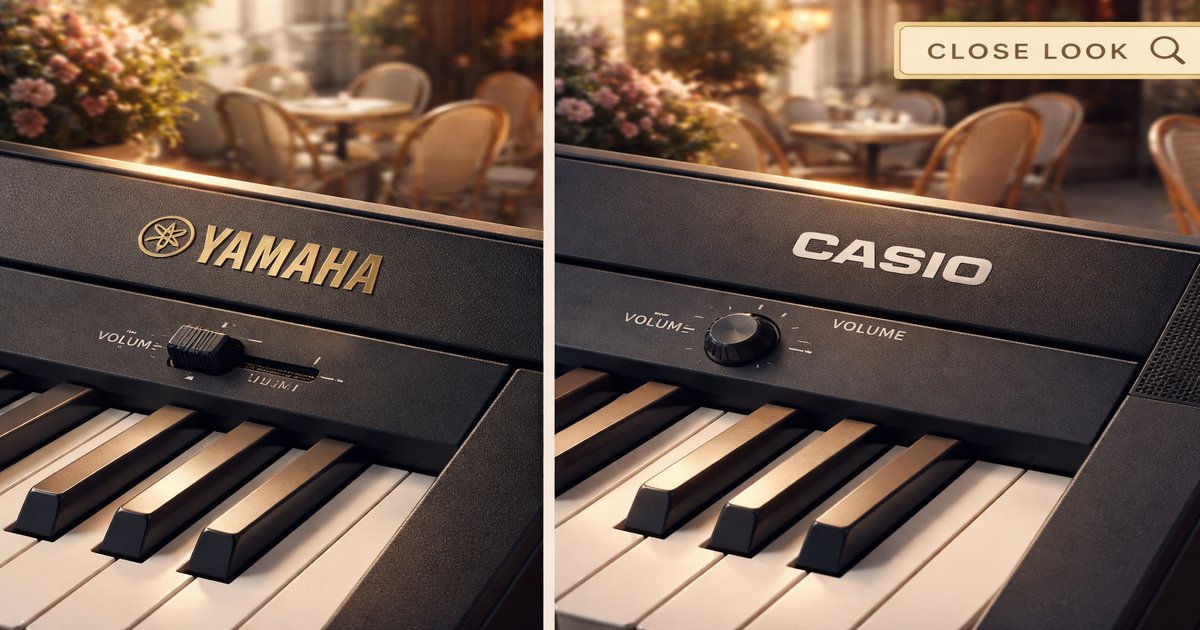
You’re ready to dive into the world of digital keyboards, but the choices are overwhelming. Yamaha and Casio are the big dogs in this fight, each with their own fan clubs. You’re probably wondering which one will hit the right note for you.
| Feature | Yamaha Keyboard | Casio Keyboard |
|---|---|---|
| Polyphony | 128 notes | 64 notes |
| Weighted Keys | ✓ | ✗ (semi-weighted) |
| Sound Quality | AWM Stereo Sampling | AiX Sound Source |
| Built-in Songs | 50 | 60 |
| Connectivity | USB, MIDI | USB, MIDI |
| Portability | 11 kg | 8 kg |
✅ yamaha keyboard Pros
- Realistic weighted keys that mimic an acoustic piano.
- Superior polyphony allowing more complex compositions.
- High-quality sound sampling for authentic tones.
❌ yamaha keyboard Cons
- Heavier and less portable than its Casio counterpart.
- Fewer built-in songs and rhythms.
✅ casio Pros
- Lightweight and easy to transport.
- More built-in songs and rhythms, good for beginners.
- Affordable price point.
❌ casio Cons
- Semi-weighted keys don’t provide the full piano experience.
- Lower polyphony limits complex compositions.
- Sound quality not as rich as Yamaha’s.
Performance
Yamaha keyboards are renowned for their performance, particularly in sound quality and key action. If you’re focusing on intricate compositions and need every note to shine, Yamaha’s higher polyphony and weighted keys make a difference. Casio, on the other hand, offers a decent performance for casual play and smaller gigs. It’s not going to wow a concert hall, but for practice or small gatherings, it holds its own. Think of Casio as your reliable commuter car, while the Yamaha is a luxury sedan with all the bells and whistles.
Build Quality
When it comes to build quality, Yamaha feels solid and substantial. The heft of the keyboard reflects its durability, even if it makes it less portable. Casio, being lighter, suggests some compromise on materials, but for the price, it’s not bad. If you’re rough on your gear or plan to travel with it, Yamaha might be the better choice. Casio keyboards are sturdy enough for home use and occasional outings, but they don’t have the same rugged feel.
Value
Casio offers excellent value for beginners and those on a budget. You get a lot of features for your money, making it a fantastic starter keyboard. Yamaha is pricier, but you’re paying for superior sound and build quality. If you plan to advance in your piano skills, Yamaha might save you an upgrade down the line. For casual use or if you’re still figuring out if the piano is your thing, Casio is a smart, economical choice.
Both Yamaha and Casio have their quirks that you won’t find in the marketing materials. Yamaha’s added weight can be a drag if you’re frequently on the move. Casio’s lighter build, while portable, might feel a bit toy-like if you’ve ever played a real piano. Neither is a perfect substitute for an acoustic piano, but they come close in their own ways.
Our Final Verdict: Which One Should You Buy?
If you’re a beginner or need a portable keyboard without breaking the bank, Casio is your go-to. It’s light, affordable, and packed with features to keep you entertained. For serious musicians or those who prioritize sound quality and realistic feel, Yamaha is worth the investment. It offers a more authentic playing experience, suitable for both practice and performance.
Is the Yamaha keyboard suitable for beginners?
Yes, but it may be overkill if you’re just starting out. It shines more for intermediate to advanced players.
How does the Casio keyboard hold up over time?
Casio keyboards are generally reliable with proper care, though they might show wear faster than a Yamaha due to lighter materials.
Can I connect these keyboards to a computer?
Both keyboards offer USB and MIDI connectivity, making them suitable for digital composition and recording.