

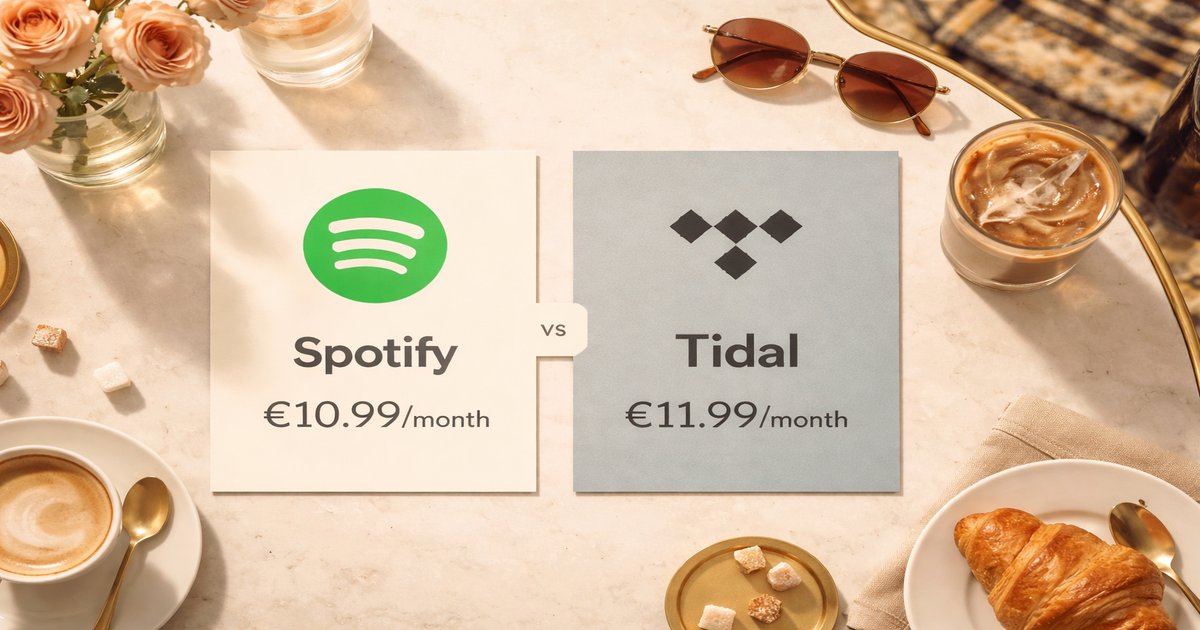
You’ve finally decided to pay for a music streaming service, but now you’re stuck between Spotify and Tidal. Both promise endless tracks and playlists, but your decision might come down to price, sound quality, or even social sharing features. Let’s break it down so you can pick the right service for your jam-packed lifestyle.
| Feature | Spotify | Tidal |
|---|---|---|
| Monthly Price (Standard) | $9.99 | $9.99 |
| Family Plan Price | $15.99 | $14.99 |
| Student Discount | ✓ | ✓ |
| HiFi Sound Quality | ✗ | ✓ |
| Music Library Size | Over 100 million tracks | Over 100 million tracks |
| Social Sharing Features | ✓ | ✗ |
✅ spotify price Pros
- Seamless integration with social media for easy sharing.
- Extensive podcast library included at no extra cost.
- Regularly updated playlists tailored to your tastes.
❌ spotify price Cons
- No HiFi audio option for audiophiles.
- Ads on the free tier can be intrusive.
✅ tidal Pros
- Superior HiFi sound quality for an immersive music experience.
- Better compensation for artists compared to other platforms.
- Exclusive content and early releases.
❌ tidal Cons
- Social sharing features are limited compared to Spotify.
- Interface can feel less intuitive for first-time users.
Sound Quality: Spotify vs. Tidal
When it comes to sound quality, Tidal runs circles around Spotify. If you’re the kind of person who cringes at low-bitrate audio, Tidal’s HiFi and Master Quality Authenticated tracks will feel like a godsend. Spotify, on the other hand, offers standard sound quality that might suffice for casual listeners and those who primarily use earbuds. But if you’ve invested in high-end headphones or a killer sound system, Tidal makes every penny of its premium pricing count by delivering richer, more detailed sound.
User Experience: Navigating Your Tunes
Spotify shines with its slick and intuitive interface. Finding your favorite tracks, checking out curated playlists, or discovering new podcasts feels like second nature. Their social sharing capabilities also make it a breeze to share that killer track with your friends. Tidal, while offering a decent interface, lacks the seamlessness that Spotify provides. Though Tidal’s interface is functional, Spotify’s UI is more polished and user-friendly, making it the better choice for those who value ease of use.
Value for Money: What Do You Get?
Both Spotify and Tidal price their standard subscriptions at $9.99/month, but the value offered differs dramatically depending on what you prioritize. Spotify’s family plan is slightly more expensive, but it makes up for it with a rich ecosystem of podcasts and daily playlist updates that keep things fresh. Tidal, with its slightly cheaper family plan, offers unparalleled sound quality and artist-first initiatives that appeal to the ethically conscious music lover. If you’re chasing sound quality, Tidal’s price is justified, but if variety and ease of use are your jam, Spotify is hard to beat.
Most folks don’t realize that Spotify’s free version is pretty limited if you hate ads, and Tidal’s HiFi option might be overkill if you’re just listening on basic earbuds. Also, Tidal’s exclusive content is great but can be hit-or-miss depending on your music taste. Consider these before making your move.
Our Final Verdict: Which One Should You Buy?
If you’re a casual listener who values social sharing and a robust podcast selection, Spotify is your go-to. It’s perfect for someone who loves discovering new music through slick playlists and social features. On the other hand, if you’re an audiophile who can’t compromise on sound quality and wants to support artists more directly, Tidal is the premium choice. Choose Tidal if your sound system is as important to you as the music itself.
Can I use these services offline?
Yes, both Spotify and Tidal allow for offline downloads, but you’ll need a premium subscription for this feature.
Are there any free versions available?
Spotify offers a free tier with ads, while Tidal does not have a free version. Tidal offers a 30-day free trial instead.
Which service offers more exclusive content?
Tidal is known for exclusive content, including early album releases and unique artist collaborations, especially for HiFi subscribers.