

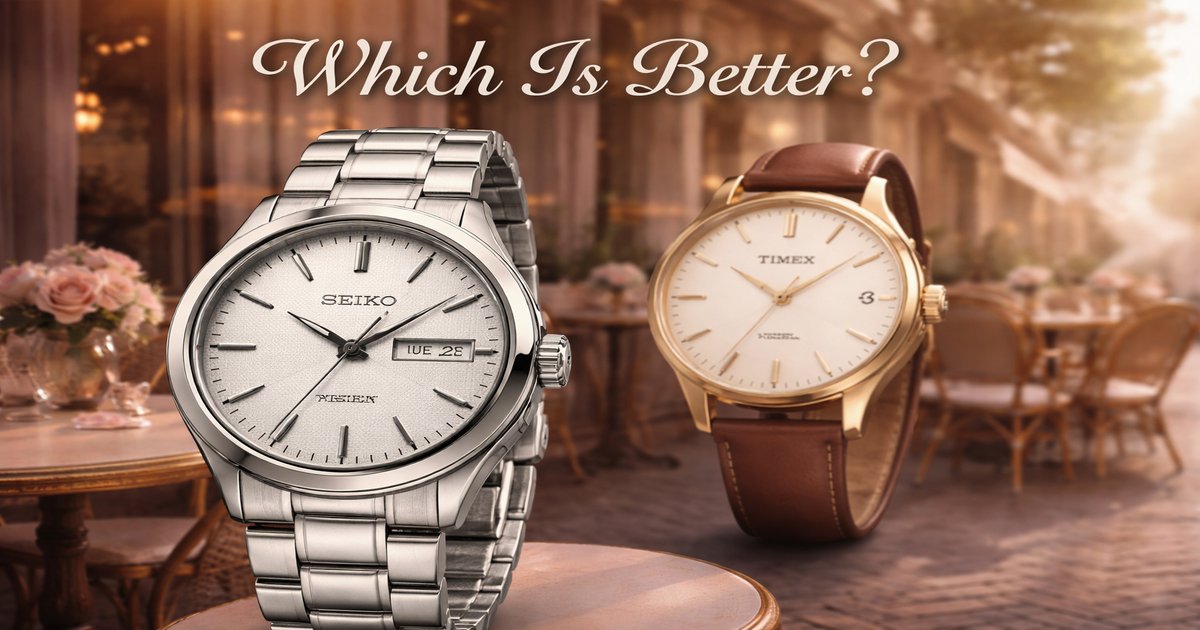
You’re ready to up your watch game, but you’re stuck between Seiko and Timex. Maybe you’re after something that looks sharp at the office, but can also handle a weekend hiking trip. You’re in the right place to find out which brand will tick your boxes without skipping a beat.
| Feature | Seiko | Timex |
|---|---|---|
| Movement Type | Automatic | Quartz |
| Water Resistance | 100m | 50m |
| Luminescence | ✓ | ✓ |
| Price Range | $300 – $500 | $50 – $150 |
| Build Material | Stainless Steel | Resin/Brass |
| Brand Prestige | High | Moderate |
✅ seiko Pros
- Superior build quality with stainless steel cases.
- Automatic movement that appeals to watch enthusiasts.
- Higher water resistance, suitable for swimming.
❌ seiko Cons
- More expensive compared to Timex.
- Heavier due to the use of stainless steel.
- Requires maintenance for the automatic movement.
✅ timex Pros
- Affordable price range, ideal for budget-conscious buyers.
- Lightweight, making it comfortable for all-day wear.
- Reliable quartz movement that requires minimal maintenance.
❌ timex Cons
- Lower water resistance, not suitable for diving.
- Less durable materials, like resin and brass.
- Less prestigious brand image among watch connoisseurs.
Performance & Movement
Seiko’s automatic movement is a dream if you love the mechanical heartbeat of a watch. It’s a living piece on your wrist, but remember, it needs some TLC—like periodic winding and servicing. Timex, on the other hand, offers quartz reliability. You won’t get the same mechanical charm, but the battery-powered precision is hassle-free. If you’re prone to forgetting to wind your watch, Timex might save you a headache.
Build Quality & Style
Seiko wins hands down with its stainless steel cases and sapphire crystals, offering durability and scratch resistance. These watches are robust, but they do come with extra weight. Timex provides a lighter build, often using resin or brass, which is great for comfort but potentially less durable in rough situations. If you’re the clumsy type or involved in a lot of physical activities, you might want to consider how each will stand the test of your lifestyle.
Value for Money
Seiko’s price tag is higher, but you’re paying for longevity and craftsmanship. Think of it as an investment in an accessory that can take you from the office to a weekend adventure. Timex, however, offers great value for those who need a reliable timepiece without the hefty price. It’s perfect for someone starting their watch collection or needing a trusty sidekick for everyday wear.
Neither Seiko nor Timex offers much in terms of smart features. If you’re looking for a smartwatch with notifications, fitness tracking, or app compatibility, both brands might disappoint. Also, while Seiko’s automatic movement is celebrated, it can be a pain if you’re not wearing the watch daily since it will stop ticking without motion.
Our Final Verdict: Which One Should You Buy?
If you’re someone who appreciates fine craftsmanship and are willing to invest in a watch that will last decades, Seiko is your go-to. It’s perfect for a professional who wants a watch that transitions seamlessly from a business meeting to a casual outing. On the flip side, if you’re looking for something budget-friendly, lightweight, and reliable for everyday use, Timex is your best bet. It’s ideal for students or anyone who needs a fuss-free watch without the maintenance needs of an automatic movement.
Is Seiko’s automatic movement better than Timex’s quartz?
It depends on your preference. Automatic movements are cherished by enthusiasts for their craftsmanship, while quartz offers hassle-free accuracy.
Are Timex watches durable for outdoor activities?
Timex watches are generally durable for most daily activities but might not hold up as well in extreme conditions compared to Seiko’s tougher builds.
Do Seiko watches require a lot of maintenance?
Seiko’s automatic watches do require some maintenance, like winding and occasional servicing, to keep them running smoothly.