
You’re standing in the drugstore aisle, overwhelmed by all the skincare options, and you realize you need something to tackle that pesky dry skin. You’ve heard of both Aquaphor and Eucerin, but which one will actually do the trick without leaving you feeling greasy or dry?
| Specification | Aquaphor | Eucerin |
|---|---|---|
| Main Ingredient | Petrolatum | Urea |
| Fragrance-Free | ✓ | ✓ |
| Suitable for Sensitive Skin | ✓ | ✓ |
| Greasy Residue | ✓ | ✗ |
| Healing Ointment | ✓ | ✗ |
| Moisturizing Cream | ✗ | ✓ |
✅ aquaphor Pros
- Excellent for severe dry patches and cracked skin.
- Creates a protective barrier on the skin.
- Multi-purpose use, from cuts to diaper rash.
❌ aquaphor Cons
- Leaves a greasy residue.
- Not ideal for use under makeup.
✅ eucerin Pros
- Absorbs quickly without a greasy feel.
- Contains urea, which is great for softening skin.
- Effective for daily use and eczema-prone skin.
❌ eucerin Cons
- Less effective on extremely dry or cracked skin.
- Some formulas may cause mild irritation initially.
Performance on Different Skin Types
Aquaphor is your go-to if you’ve got extremely dry or compromised skin. Its petrolatum base acts like a blanket, sealing moisture and allowing your skin to heal. If you’re dealing with eczema or cracked heels, it’s a lifesaver. Eucerin, on the other hand, is better for those looking for a daily moisturizer with fast absorption. Its urea content makes it fantastic for softening rough patches but without the greasy aftermath. If you’re planning to apply and dash out the door, Eucerin is the less messy option.
Build Quality and Ingredients
Aquaphor’s formulation is straightforward, relying heavily on petrolatum to do the heavy lifting. It’s thick and creates a barrier that locks in moisture. Eucerin features a more complex mix, often including urea and lactic acid, which work as humectants. This combination is excellent for pulling moisture into the skin and keeping it there. However, if you’re sensitive to active ingredients, Eucerin’s formulations might cause a slight tingle initially, which usually subsides.
Value for Money
Aquaphor might be the pricier option upfront, but its versatility justifies the cost. You can use it for minor cuts, burns, and even as a lip balm. Eucerin, while cheaper, is more of a specialist in daily moisturization. If you’re looking for something to use all over, every day, Eucerin gives you more bang for your buck. However, for targeted treatment, Aquaphor pulls ahead. Assess your needs—if you’re someone who prefers a one-stop solution, Aquaphor is the way to go.
Both products claim to be the best for dry skin, but neither is a miracle worker. Aquaphor can be annoyingly greasy, sticking to clothes if you’re not careful. Eucerin, while more comfortable for daily use, might not cut it for severe cases. You’ll likely end up using both for different needs.
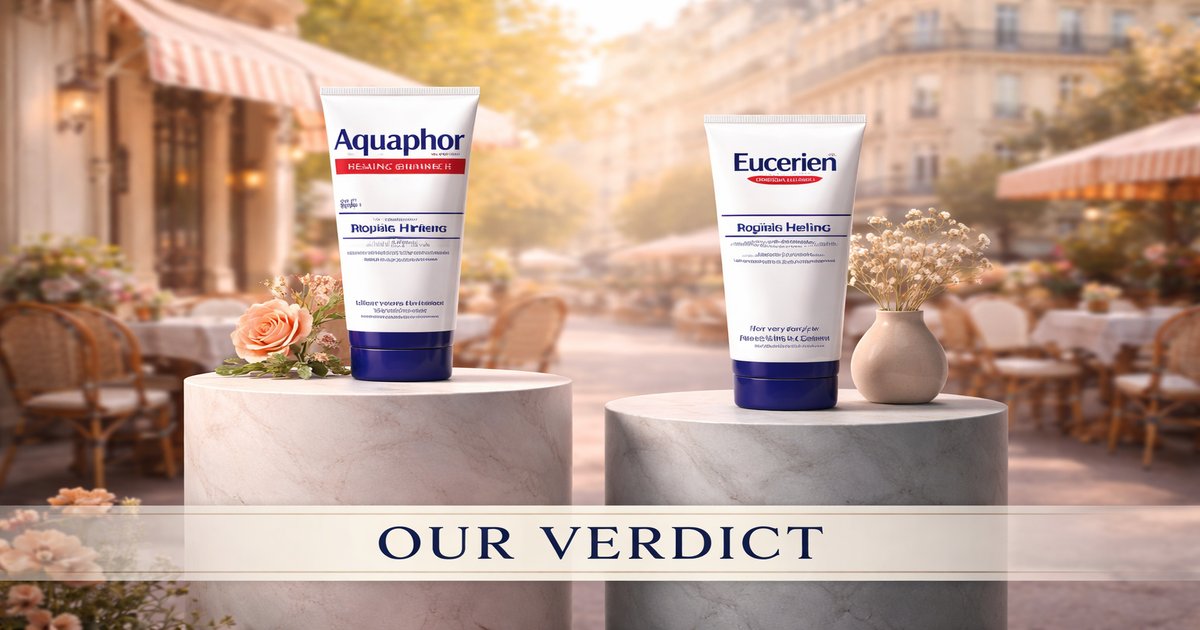
Our Final Verdict: Which One Should You Buy?
If you’re someone with severely dry or cracked skin who needs a barrier to heal and protect, grab a jar of Aquaphor. It’s the heavy-duty option you’ll want in your arsenal. However, if you prefer a lightweight, fast-absorbing cream for everyday use, especially if you’re managing eczema, Eucerin is your new best friend. Each has its place, so consider your specific skin needs before making a choice.
Is Aquaphor safe for use on the face?
Yes, Aquaphor can be used on the face, especially for dry patches or as a protective layer. Just be cautious if you have acne-prone skin, as it can be greasy.
Can Eucerin be used on sensitive skin?
Eucerin is generally well-tolerated by sensitive skin, but it’s always good to do a patch test first due to its active ingredients like urea.
How long does it take to see results with Eucerin?
Most people notice softer skin within a few days of consistent use, but it can take longer for significant improvements in skin conditions like eczema.