

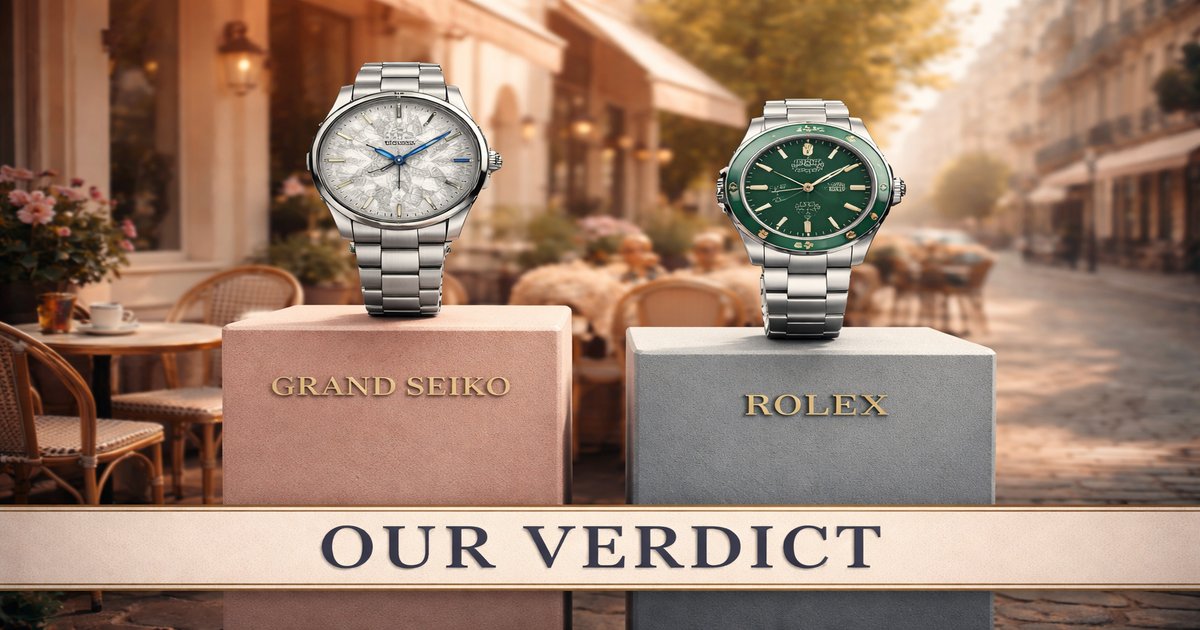
You’re at the crossroads of high-end timepieces, looking to invest in a watch that mirrors your personality and complements your lifestyle. You’re torn between the artful elegance of Grand Seiko and the iconic prestige of Rolex, but which one truly deserves a spot on your wrist?
| Feature | Grand Seiko | Rolex |
|---|---|---|
| Movement Type | Spring Drive/Quartz/Mechanical | Automatic |
| Origin | Japan | Switzerland |
| Water Resistance | Up to 100 meters | Up to 300 meters |
| Price Range | $3,000 – $60,000 | $5,000 – $75,000 |
| Material Options | Stainless Steel, Titanium, Gold | Stainless Steel, Gold, Platinum |
| Warranty | 5 years | 5 years |
| Brand Recognition | ✓ | ✓ |
✅ grand seiko Pros
- Exceptional craftsmanship with a focus on detail.
- Unique Spring Drive technology for precision.
- Offers a variety of movements including quartz, appealing to different preferences.
❌ grand seiko Cons
- Less global brand recognition compared to Rolex.
- Limited resale value outside niche collector circles.
✅ rolex Pros
- Unmatched global prestige and brand recognition.
- Exceptional durability and water resistance, ideal for diving.
- Strong resale value and investment potential.
❌ rolex Cons
- Higher price point may not reflect significant quality difference for casual users.
- Long waitlists for popular models can be frustrating.
Performance and Precision
When it comes to precision, Grand Seiko’s Spring Drive technology is a game-changer. It combines the best of mechanical and quartz movements, giving you unrivaled accuracy without the need for a battery. On the other hand, Rolex’s automatic movements are celebrated for their robustness and reliability, but they can’t quite match the precision of Grand Seiko’s quartz options. If you’re a precision geek who loves to track seconds, Grand Seiko offers that razor-sharp accuracy.
Build Quality and Durability
Rolex watches are built like tanks. With models like the Submariner offering up to 300 meters of water resistance, they’re perfect for adventurous souls who find themselves in wet environments often. Grand Seiko, while offering excellent build quality with meticulous attention to detail, generally maxes out at 100 meters. If you’re planning to dive or frequently find yourself in harsh conditions, Rolex might be your better companion.
Value and Investment
Rolex has a reputation for holding its value, often becoming more valuable over time. This makes it not just a watch, but an investment. Grand Seiko, with its niche appeal, might not offer the same financial return but appeals to those who appreciate artistry and innovation. If you’re more inclined towards retaining value and possibly making a profit, Rolex is the safer bet.
Both brands are top-tier, but the hidden truth is that Grand Seiko offers more innovation for your buck, especially if you appreciate technology and craftsmanship over brand prestige. However, if status and investment value are your priorities, Rolex holds a distinct edge.
Our Final Verdict: Which One Should You Buy?
If you’re the type who values unique craftsmanship and precision, and you’re not swayed by brand prestige, Grand Seiko should be your choice. It’s perfect for those who appreciate the artistry and innovation of watchmaking. However, if you want a timepiece that’s a status symbol, holds its value, and is recognized universally, Rolex is the way to go. It’s ideal for those who view watches as investments or symbols of success.
Is a Grand Seiko as durable as a Rolex?
While Grand Seiko offers exceptional build quality, Rolex is generally more durable, especially in water resistance and rugged environments.
Do these watches require a lot of maintenance?
Both brands recommend servicing every 5 to 10 years. Rolex might need more frequent attention if heavily used in extreme conditions.
Which brand holds its value better?
Rolex tends to hold its value better and even appreciates over time, making it a more viable investment option.