

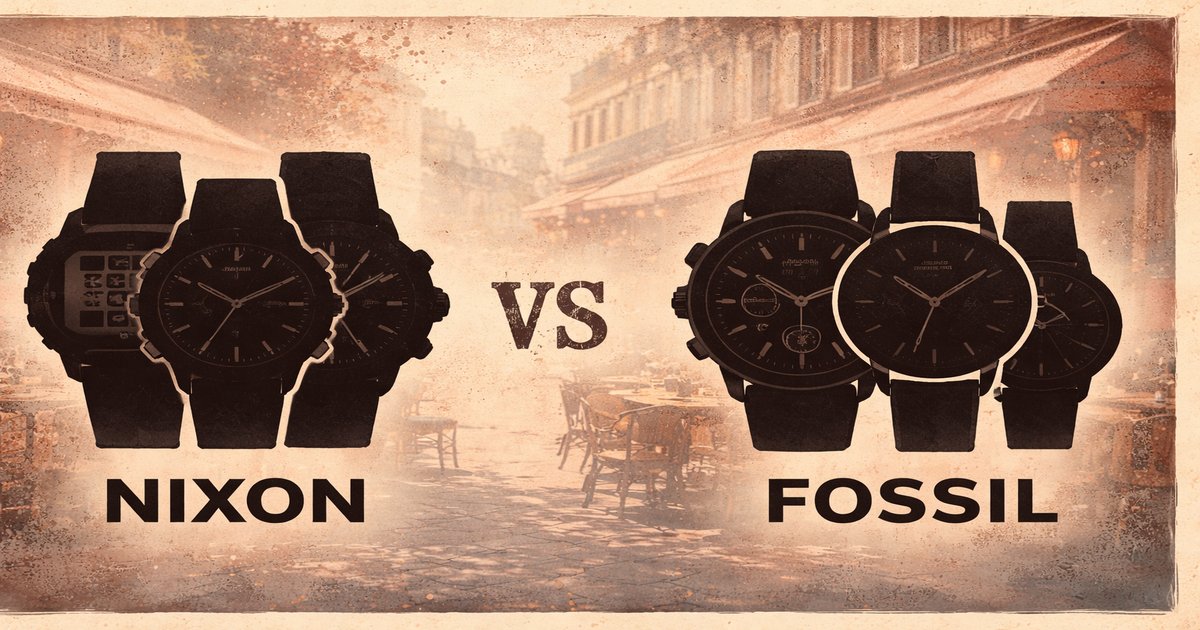
You’re in the market for a new watch and torn between the rugged Nixon and the stylish Fossil. Both brands have their own flair, but which one fits your lifestyle? Let’s dive into the nuts and bolts to see which watch deserves your hard-earned cash.
| Feature | Nixon Watches | Fossil Watches |
|---|---|---|
| Water Resistance | 100m | 50m |
| Case Material | Stainless Steel | Stainless Steel |
| Smart Features | ✗ | ✓ |
| Price Range | $100 – $500 | $75 – $300 |
| Design Styles | Sporty, Tactical | Classic, Trendy |
| Battery Life | 2-3 years (Quartz) | 6 months – 1 year (Smart) |
✅ nixon watches Pros
- Highly durable build, perfect for outdoor activities.
- Superior water resistance, making it swim-friendly.
- Unique, eye-catching designs for those who like to stand out.
❌ nixon watches Cons
- Lack of smart features can be a deal-breaker for tech lovers.
- Pricier compared to other non-smart watches.
- Bulky designs that might not suit formal settings.
✅ fossil Pros
- Affordable and stylish, fitting a variety of fashion tastes.
- Comes with smart features, appealing to modern users.
- Lightweight and comfortable for daily wear.
❌ fossil Cons
- Lower water resistance limits use in aquatic environments.
- Shorter battery life due to smart features.
- Mixed material quality in some models.
Performance and Functionality
Nixon watches are built like tanks. If you’re outdoorsy and don’t mind a bit of bulk on your wrist, you’ll appreciate their robustness. With water resistance up to 100 meters, you can take a dip without worry. On the flip side, Fossil offers smart functionalities like notifications and fitness tracking, which are handy for tech-savvy users. However, you pay for those features with reduced water resistance and battery life. If you prioritize connectivity over ruggedness, Fossil is your pick.
Build Quality and Design
Nixon goes all out with stainless steel cases and sporty designs, giving off a rugged, tactical vibe. They’re not just watches; they’re statements. Fossil keeps things classy and trendy, dabbling in a broader range of styles that fit both casual and formal occasions. While both brands use stainless steel, Fossil occasionally cuts corners with mixed materials, impacting durability. If consistent build quality is your game, Nixon wins. But for style versatility, Fossil takes the cake.
Value for Money
Nixon watches are an investment in durability. They might hit your wallet harder, but they won’t let you down in tough conditions. Fossil, however, offers bang for your buck with smart features at a lower price point. If you want a watch that does more than just tell time without breaking the bank, Fossil is your go-to. Be mindful that the lower price often comes with compromises in material quality and longevity.
Nixon’s lack of smart features can feel outdated when you’re used to constant connectivity. Meanwhile, Fossil’s battery life can feel like a nuisance if you’re not into regular charging. Also, Nixon’s bulk can be uncomfortable for long wear, especially if you’re used to lighter watches.
Our Final Verdict: Which One Should You Buy?
If you’re the adventurous type who values durability and doesn’t mind a bit of bulk, Nixon is your watch. It’s built to endure the outdoors and makes a bold statement on your wrist. On the other hand, if your lifestyle is more urban and you appreciate smart features and versatile style, Fossil is the better pick. It’s affordable and offers the modern functionalities you might crave in a watch.
How well does each brand’s watch fit on the wrist?
Nixon watches tend to be bulkier, so they might fit snugly on larger wrists, while Fossil offers a range of sizes that can accommodate most wrist sizes comfortably.
Are these watches compatible with both iOS and Android devices?
Fossil’s smartwatches are compatible with both iOS and Android, offering a seamless experience across platforms. Nixon, lacking smart features, doesn’t offer device compatibility.
How long can you expect these watches to last?
Nixon watches, thanks to their rugged build, can last several years with minimal wear. Fossil watches, especially the smart variants, might require more frequent replacements due to battery life and tech updates.